Area de estudio

Laboratorio de fisiología y biología molecular vegetal

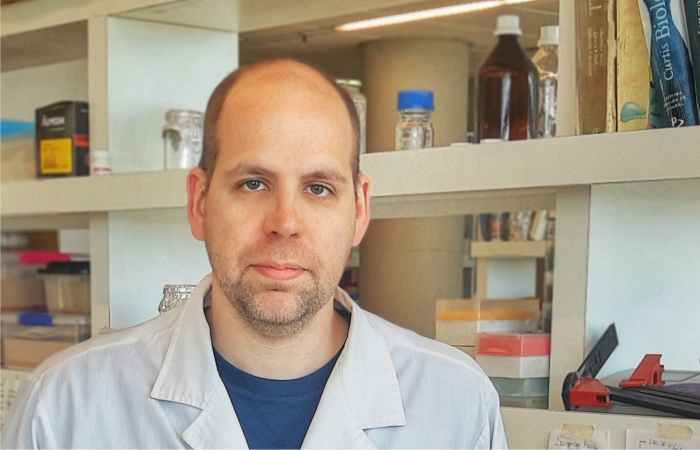
Dr. Martiniano Ricardi
JEFE DE GRUPO

Departamento de Fisiología, Biología Molecular y Celular, FCEN, UBA.

Investigador Adjunto CONICET 

martiniano@fbmc.fcen.uba.ar

Después de terminar mi doctorado en la Universidad de Buenos Aires, trabajando con la proteína ASR1 de tomate, pasé de estudiar factores de transcripción y estrés hídrico a la O‑glicosilación y la expansión celular durante mi posdoctorado. Actualmente he establecido mi propio grupo, con investigación en varias áreas de la biología vegetal. En nuestro laboratorio tenemos un fuerte enfoque en la biología celular. Intentamos entender cómo las plantas regulan su crecimiento ajustando la secreción y el reciclaje y el impacto que tiene esto en las interacciones planta‑bacteria. Además, desarrollamos nuevas técnicas para facilitar la investigación en biología vegetal.
/
After finishing my PhD at the University of Buenos Aires, working with the ASR1 protein from tomato, I switched from transcription factors and water stress to O‑glycosylation and cell expansion as a postdoc. Now I have established my own group, with research in several areas of plant biology. In our lab, we have a strong focus on cell biology. We try to understand how plants regulate their growth by tuning secretion and recycling and how this may affect plant–bacteria interactions. I addition, we develope new techniques to facilitate plant biology research.

Líneas de Investigación / Research Projects

Regulación de la fusión de vesículas / Regulation of vesicle fusion

Las células eucarióticas poseen organelas que compartimentalizan sus funciones celulares. Esta división, impone la necesidad de una vasta e intrincada organización que permita mover material (proteínas, lípidos, metabolitos) entre diferentes ubicaciones de la célula. Gran parte de estos movimientos ocurre en vesículas que deben fusionarse a su sitio destino de manera altamente especifica y controlada.

En el laboratorio trabajamos con la proteína del tipo R-SNARE VAMP721, responsable del ultimo paso de la fusión de vesículas en la secreción, la división celular y el reciclado. Estudiamos su regulacion por fosforilacion y como esto afecta el crecimiento y las respuestas inmunes. Tambien buscamos entender que factores ambientales regulan su actividad modulando el crecimiento vegetal.

Eukaryotic cells contain organelles that compartmentalize their cellular functions. This division creates the need for an extensive and intricate organization that allows the movement of material (proteins, lipids, metabolites) between different locations within the cell. Much of this transport occurs in vesicles that must fuse with their target site in a highly specific and regulated manner.

In the lab, we work with the R‑SNARE–type protein VAMP721, which is responsible for the final step of vesicle fusion in secretion, cell division, and recycling. We study its regulation by phosphorylation and how this affects growth and immune responses. We also aim to understand which environmental factors regulate its activity, thereby modulating plant growth.

Desarrollo y mejoramiento de técnicas moleculares para detección de interacciones proteína-proteína / Development and improvement of molecular techniques for detecting protein–protein interactions.

Desde su desarrollo la técnica de complementación bimolecular de la fluorescencia (Bifc) permite la visualización in-vivo de interacción entre dos proteínas. El sistema de Bifc fue mejorando con el tiempo con la incorporación en un mismo vector de ambas proteínas a testear y una segunda proteína fluorescente como punto de referencia. Este último “upgrade” se conoce como rBifc.

Sin embargo, una de las principales limitantes del sistema es que no solo responde a la fuerza de la interacción entre dos proteínas dadas sino que también refleja la estabilidad de cada una de estas proteínas. Si por ejemplo una de ellas fuera rápidamente degradada rBifc daría un falso resultado negativo.

Actualmente estamos desarrollando un nuevo rBifc el cual será inducible y consistirá en un único mRNA que luego de traducirse dará origen a las tres proteínas necesarias para el sistema. Este nuevo irBifc (por inducible rBifc) permitirá evitar falsos positivos y negativos, así como también estudios dinámicos de la interacción de las proteínas en cuestión.

/

Since its development, the bimolecular fluorescence complementation (BiFC) technique has enabled the in vivo visualization of interactions between two proteins. The BiFC system has improved over time with the incorporation of both proteins to be tested into a single vector, along with a second fluorescent protein as a reference point. This latest “upgrade” is known as rBiFC.

However, one of the main limitations of the system is that it not only reflects the strength of the interaction between two given proteins, but also the stability of each of these proteins. For example, if one of them is rapidly degraded, rBiFC may yield a false negative result.

We are currently developing a new version of rBiFC that will be inducible and will consist of a single mRNA which, once translated, will give rise to the three proteins required for the system. This new irBiFC (for inducible rBiFC) will help avoid both false positives and false negatives, and will also enable dynamic studies of protein–protein interactions.

Desarrollo de un dispositivo para seleccionar automaticamente semillas transgenicas de Arabidopsis / Development of a device for the automatic selection of transgenic Arabidopsis seeds.

Uno de los mayores cuellos de botella en el trabajo con Arabidopsis es el tiempo que se necesita para obtener y seleccionar líneas transgénicas. El sistema FAST(fluorescence-accumulating seed technology) permite la identificación de eventos transgénicos en las semillas de manera no destructiva.

En un trabajo multidisciplinario entre biólogos, ingenieros y físicos, hemos comenzado un proyecto del tipo START-UP para construir un dispositivo capaz de seleccionar de manera automática las semillas de Arabidopsis transformadas con FAST. Este dispositivo facilitara un uso mas masivo de la tecnología FAST y ayudará a reducir los tiempos necesarios para la creación de líneas transgénicas requiriendo una generación menos para los experimentos (2-3 meses).

También permitirá la construcción y selección de bibliotecas para la búsqueda denovo de genes relevantes en el fenotipo de interés.

/

One of the main bottlenecks in working with Arabidopsis is the time required to generate and select transgenic lines. The FAST (fluorescence-accumulating seed technology) system enables the non-destructive identification of transgenic events at the seed stage.

Through a multidisciplinary collaboration involving biologists, engineers, and physicists, we have launched a startup-oriented project to develop a device capable of automatically selecting Arabidopsis seeds transformed using the FAST system. This device will facilitate the broader adoption of FAST technology and help reduce the time required to generate transgenic lines, effectively saving one generation (2–3 months) in experimental workflows.

Additionally, it will enable the construction and selection of libraries for the de novo identification of genes associated with phenotypes of interest.

Caracterizacion de lineas transgenicas por intensidad de fluorescencia / Characterization of transgenic lines based on fluorescence intensity.

Los promotores son importantes reguladores de la expresion espacio-temporal de un transgen. Sin embargo frecuentemente se observa que lineas transgénicas independdientes con el mismo promotor muestran niveles de expresion muy diferentes. Esto se debe en gran medida a que los eventos transgenicos se insertan al azar en el genoma y se lo conce como el efecto del contexto genomico.

En colaboracion con el Dr. Hernan Grecco, hemos desarrollado un software y un protocolo para caracterizar este efecto a traves de la fluorescencia de las lineas transgénicas. Esta herramienta permite seleccionar lneas trangénicas con niveles similares de expresion para comparaciones informativas asi como tambien ,en la mayoria de los casos, permite distinguir plantulas homocigotas de heterocigotas y no transgénicas de manera no destructiva.

/

Promoters are key regulators of the spatiotemporal expression of a transgene. However, it is frequently observed that independent transgenic lines carrying the same promoter display very different expression levels. This is largely due to the fact that transgenic events insert randomly into the genome, a phenomenon known as the genomic context effect.

In collaboration with Dr. Hernán Grecco, we have developed a software tool and a protocol to characterize this effect through fluorescence measurements in transgenic lines. This approach enables the selection of transgenic lines with similar expression levels for meaningful comparisons and, in most cases, allows the non-destructive discrimination of homozygous and heterozygous seedlings, as well as the identification of non-transgenic individuals.

Intercacciones planta-bacteria

Los microorganismos de la rizosfera (el área de influencia de las raíces de las plantas) son fundamentales para el desarrollo vegetal. En colaboración con el Laboratorio de Interacciones Bacterianas, buscamos comprender y mejorar la relación entre las bacterias de vida libre presentes en la rizosfera y las plantas. Realizamos ensayos de evolución acelerada en laboratorio (ALE), bajo distintas condiciones, con el objetivo de obtener nuevos inoculantes que presenten mayor resistencia a compuestos químicos, mejor adaptación a los exudados radiculares y/o un mejor desempeño en climas fríos.
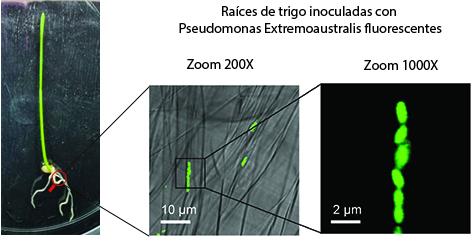
 

Rhizosphere microorganisms (the zone of soil influenced by plant roots) play a fundamental role in plant development. In collaboration with the Laboratory of Bacterial Interactions, we aim to understand and improve the relationship between free-living bacteria in the rhizosphere and plants.
We conduct accelerated laboratory evolution (ALE) assays under different conditions, with the goal of obtaining new inoculants that exhibit greater resistance to chemical compounds, improved adaptation to root exudates, and/or enhanced performance in cold climates.
Publicaciones / Publications
  • Agranatti, Carola, Ibarra, Jose G., Galeano, Mariana B., Terranova, Ruby, Godoy, Manuel S., López, Nancy I., Martiniano María Ricardi *, Tribelli, Paula M*. ” Functional auxin signaling and phosphorus acquisition induced in planta by the extremophile bacterium Pseudomonas extremaustralis”. Rhizosphere, vol. 38. https://doi.org/10.1016/j.rhisph.2026.10132
  • Nicolás Gaggion, Noelia A Boccardo, Rodrigo Bonazzola, María Florencia Legascue, María Florencia Mammarella, Florencia Sol Rodriguez, Federico Emanuel Aballay, Florencia Belén Catulo, Andana Barrios, Luciano J Santoro, Franco Accavallo, Santiago Nahuel Villarreal, Leonardo I Pereyra-Bistrain, Moussa Benhamed, Martin Crespi, Martiniano María Ricardi, Ezequiel Petrillo, Thomas Blein, Federico Ariel, Enzo Ferrante, “ChronoRoot 2.0: an open AI-powered platform for 2D temporal plant phenotyping”, GigaScience, Volume 15, 2026, giag018, https://doi.org/10.1093/gigascience/giag018
  • Mariana B. Galeano, Stefania A. Robaldi, Tania B. Gordillo, Martiniano M. Ricardi, Pablo M. Cassanelli, Rosana O. Pereda, Maria Mercedes Palomino, Paula Maria Tribelli. “Optimized DNA extraction protocol for Staphylococcus aureus strains utilizing liquid nitrogen“. RAM 2025 DOI: 10.1016/j.ram.2024.12.006
  • Ricardi MM, Tribelli PM, Costa CS, Pezzoni. Global transcriptional response of Pseudomonas aeruginosa to UVA radiation. Photochem Photobiol Sci. 2024;23(11):2029-2044.
  • Cermesoni C, Grefen C, Ricardi MM. Where R-SNAREs like to roam – the vesicle-associated membrane proteins VAMP721 & VAMP722 in trafficking hotspots. Current Opinion in Plant Biology. Elsevier Ltd; 2024. doi:10.1016/j.pbi.2024.102571
  • Sede AR, Wengier DL, Borassi C, Ricardi MM, Somoza SC, Aguiló R, et al. Arabidopsis pollen prolyl-hydroxylases P4H4/6 are relevant for correct hydroxylation and secretion of LRX11 in pollen tubes. J Exp Bot. 2024;75: 4415–4427. doi:10.1093/JXB/ERAE269
  • Solar Venero EC, Galeano MB, Luqman A, Ricardi MM, Serral F, Fernandez Do Porto D, et al. Fever-like temperature impacts on Staphylococcus aureus and Pseudomonas aeruginosa interaction, physiology, and virulence both in vitro and in vivo. BMC Biol. 2024;22: 1–19. doi:10.1186/S12915-024-01830-3/FIGURES/8
  • Pacheco JM, Song L, Kuběnová L, Ovečka M, Berdion Gabarain V, Peralta JM, et al. Cell surface receptor kinase FERONIA linked to nutrient sensor TORC signaling controls root hair growth at low temperature linked to low nitrate in Arabidopsis thaliana. New Phytologist. 2023;238: 169–185. doi:10.1111/NPH.18723
  • Ricardi MM, Wallmeroth N, Cermesoni C, Mehlhorn DG, Richter S, Zhang L, et al. A tyrosine phospho-switch within the Longin domain of VAMP721 modulates SNARE functionality. Plant Journal. 2023;116: 1633–1651. doi:10.1111/tpj.16451
  • Abrevaya XC, Galante D, Tribelli PM, Oppezzo OJ, Nobrega F, Araujo GG, et al. Protective Effects of Halite to Vacuum and Vacuum-Ultraviolet Radiation: A Potential Scenario during a Young Sun Superflare. Astrobiology. 2023;23: 245–268. doi:10.1089/ast.2022.0016
  • Ricardi MM, Estevez JM. The tip of the iceberg: ROP2 directly interacts with SYP121 to regulate root-hair polarization, elongation, and exocytosis. Molecular Plant. Cell Press; 2022. pp. 1084–1086. doi:10.1016/j.molp.2022.06.004
  • Asseck LY, Mehlhorn DG, Monroy JR, Ricardi MM, Breuninger H, Wallmeroth N, et al. Endoplasmic reticulum membrane receptors of the GET pathway are conserved throughout eukaryotes. Proc Natl Acad Sci U S A. 2021;118. doi:10.1073/pnas.2017636118
  • Borassi C, Gloazzo Dorosz J, Ricardi MM, Carignani Sardoy M, Pol Fachin L, Marzol E, et al. A cell surface arabinogalactan-peptide influences root hair cell fate. New Phytologist. 2020;227: 732–743. doi:10.1111/nph.16487
  • Solar Venero ECEC, Ricardi MM, Gomez-Lozano M, Molin S, Tribelli PMPM, López NINI. Oxidative stress under low oxygen conditions triggers hyperflagellation and motility in the Antarctic bacterium Pseudomonas extremaustralis. 2019;23: 587–597. doi:10.1007/s00792-019-01110-x
  • Benforte FC, Colonnella MA, Ricardi MM, Solar Venero EC, Lizarraga L, López NI, et al. Novel role of the LPS core glycosyltransferase WapH for cold adaptation in the Antarctic bacterium Pseudomonas extremaustralis. PLoS One. 2018;13. doi:10.1371/journal.pone.0192559
  • Cagnola JI, Dumont de Chassart GJ, Ibarra SE, Chimenti C, Ricardi MM, Delzer B, et al. Reduced expression of selected FASCICLIN-LIKE ARABINOGALACTAN PROTEIN genes associates with the abortion of kernels in field crops of Zea mays (maize) and of Arabidopsis seeds. Plant Cell Environ. 2018;41: 661–674. doi:10.1111/pce.13136
  • Wetzler DE, Fuchs Wightman F, Bucci HA, Rinaldi J, Caramelo JJ, Iusem ND, Ricardi MM. Conformational plasticity of the intrinsically disordered protein asr1 modulates its function as a drought stress-responsive gene. PLoS One. 2018. doi:10.1371/journal.pone.0202808
  • Tribelli PM, Rossi L, Ricardi MM, Gomez-Lozano M, Molin S, Raiger Iustman LJ, et al. Microaerophilic alkane degradation in Pseudomonas extremaustralis: a transcriptomic and physiological approach. J Ind Microbiol Biotechnol. 2018;45: 15–23. doi:10.1007/s10295-017-1987-z
  • Xue H, Veit C, Abas L, Tryfona T, Maresch D, Ricardi MM, et al. Arabidopsis thaliana FLA4 functions as a glycan-stabilized soluble factor via its carboxy-proximal Fasciclin 1 domain. Plant Journal. 2017;91. doi:10.1111/tpj.13591
  • Tribelli PM, Venero ECS, Ricardi MM, Gómez-Lozano M, Iustman LJR, Molin S, et al. Novel essential role of ethanol oxidation genes at low temperature revealed by transcriptome analysis in the Antarctic bacterium Pseudomonas extremaustralis. PLoS One. 2015;10. doi:10.1371/journal.pone.0145353
  • Velasquez SM, Ricardi MM, Poulsen CP, Oikawa A, Dilokpimol A, Halim A, et al. Complex regulation of prolyl-4-hydroxylases impacts root hair expansion. Mol Plant. 2015;8. doi:10.1016/j.molp.2014.11.017
  • Velasquez SM, Marzol E, Borassi C, Pol-Fachin L, Ricardi MM, Mangano S, et al. Low sugar is not always good: Impact of specific o-glycan defects on tip growth in Arabidopsis. Plant Physiol. 2015;168: 808–813. doi:10.1104/pp.114.255521
  • Ricardi MM, González RM, Zhong S, Domínguez PG, Duffy T, Turjanski PG, et al. Genome-wide data (ChIP-seq) enabled identification of cell wall-related and aquaporin genes as targets of tomato ASR1, a drought stress-responsive transcription factor. BMC Plant Biol. 2014;14: 1–14. doi:10.1186/1471-2229-14-29
  • González RM, Ricardi MM, Iusem ND. Epigenetic marks in an adaptive water stress-responsive gene in tomato roots under normal and drought conditions. 2013;8. doi:10.4161/epi.25524
  • Ricardi MM, Guaimas FF, González RM, Burrieza HP, López-Fernández MP, Jares-Erijman EA, et al. Nuclear import and dimerization of tomato ASR1, a water stress-inducible protein exclusive to plants. PLoS One. 2012;7: 1–8. doi:10.1371/journal.pone.0041008
  • Velasquez SM, Ricardi MM, Dorosz JG, Fernandez PV, Nadra AD, Pol-Fachin L, et al. O-glycosylated cell wall proteins are essential in root hair growth. Science (1979). 2011;332: 1401–1403. doi:10.1126/science.1206657
  • González RM, Ricardi MM, Iusem ND. Atypical epigenetic mark in an atypical location: Cytosine methylation at asymmetric (CNN) sites within the body of a non-repetitive tomato gene. BMC Plant Biol. 2011;11. doi:10.1186/1471-2229-11-94
Presentaciones a congresos / Conference presentations


MARTINIANO MARIA RICARDI
 
Functional relevance of an individual amino acidic residue within the longin domain of the R-SNARE proteins VAMP721 and VAMP723.
8TH INTERNATIONAL WORKSHOP ON PLANT MEMBRANE BIOLOGY
Lugar: Glasgow; Año: 2019;
DIANA ELENA WETZLER; FEDERICO FUCHS WIGHTMAN; HERNAN ANDRES BUCCI; JIMENA RINALDI; JULIO JAVIER CARAMELO; NORBERTO DANIEL IUSEM ; MARTINIANO MARIA RICARDI
THE INTRINSICALLY DISORDERED PROTEIN-PROPERTIES OF THE PLANT PROTEIN ASR1 ARE CLOSELLY RELATED TO ITS FUNCTION AS A DROUGHTSTRESS-RESPONSIVE TRANSCRIPTION FACTOR
Reunión Conjunta de Sociedades de Biociencias
Lugar: Buenos Aires; Año: 2017;
PM TRIBELLI; L ROSSI; MM RICARDI; NI LOPEZ AND ; LJ RAIGER IUSTMAN
Insights of alkane degradation in microaerobiosis by Pseudomonas extremaustralis using transcriptomic and physiological approaches.
xii congreso de microbiología general – samige
Lugar: San Mighel de Tucuman; Año: 2017;
EC SOLAR VENERO; PM TRIBELLI; MM RICARDI; NI LOPEZ
Análisis de la respuesta a estrés oxidativo a bajas tensiones de oxígeno en Pseudomonas extremaustralis: un enfoque transcriptómico
Congreso Latinoamericano y Argentino de Microbiología 2016
Lugar: Rosario; Año: 2016;
MARTINIANO M. RICARDI; DIANA ELENA WETZLER; IUSEM, NORBERTO D.
THE DROUGHT-INDUCED NATIVELY UNFOLDED TRANSCRIPTION FACTOR ASR: IDENTIFICATION OF TARGET GENES THROUGH CHIP-SEQ AND STRUCTURAL FEATURES
11th International Congress of Plant Molecular Biology
Lugar: Foz de Iguazú; Año: 2015;
TRIBELLI, PAULA M; SOLAR VENERO ESMERALDA C; MARÍA GÓMEZ-LOZANO; MARTINIANO RICARDI; SOREN MOLIN; NANCY I.LOPEZ
Screening of essential genes for cold growth in Pseudomonas extremaustralis
Global Exchange lectures. EMBO course: Bacterial small RNAs.
Lugar: Ciudad Autonoma de Buenos Aires; Año: 2014;
CECILIA BORASSI; MARTINIANO RICARDI; JORGE MUSCHIETTI; JOSÉ M. ESTEVEZ
Rol de los componentes moleculares de la pared celular durante el crecimiento del tubo polínico en Arabidopsis thaliana
X X X Reunion Argentina de Fisiologia Vegetal
Lugar: Mar del plata; Año: 2014;
MARTINIANO M. RICARDI; JAVIER GLOAZZO DOROSZ; CECILIA BORASSI; PAULA X. ARATA; MARINA CIANCIA; JORGE P. MUSCHIETTI; JOSÉ M. ESTEVEZ
Relevance of prolyl-hydroxylation and O-glycosylation on HRGPs that modulates cell elongation in the model plant Arabidopsis thaliana
First Argentinean Symposium of Glycobiology “GlycoAR 2014”
Año: 2014;
VELASQUEZ SILVIA MELINA; MARZOL ELIANA; RICARDI MARTINIANO MARIA; MANGANO SILVINA; DENITA JUAREZ SILVINA PAOLA; ESTEVEZ JOSE MANUEL
Modificaciones Postraduccionales en Extensinas: claves para el crecimiento polarizado del pelo radical
X X X Reunion Argentina de Fisiologia Vegetal
Lugar: Mar del plata; Año: 2014;
VELAZQUES SM; RICARDI MM; MANGANO S; DENITA JUAREZ SP; GLOAZZO DOROSZ J; SALGADO SALTER JD; BORASSI C; ESTEVEZ JM
Complex posttranslational modifications in EXT proteins that control root hair tip-growth in Arabidopsis
XLIII Reunião Anual da Sociedade Brasileira de Bioquímica e Biologia Molecular – SBBq
Lugar: Foz do Iguaçu; Año: 2014;
PAULA M TRIBELL; MARTINIANO M RICARDI; SØREN MOLIN; NANCY I LOPEZ
DEEP RNA-SEQUENCING ANALYSIS OF THE ANTARCTIC BACTERIUM Pseudomonas extremaustralis IN RESPONSE TO LOW TEMPERATURE
Congreso de Microbiologia General (SAMIGE)
Lugar: Mar del Plata; Año: 2014;
MARTINIANO M. RICARDI; RODRIGO M. GONZALEZ; JOSÉ M ESTÉVEZ; NORBERTO D. IUSEM
NUCLEAR IMPORT AND DIMERIZATION OF TOMATO ASR1, A WATER STRESS-INDUCIBLE PROTEIN EXCLUSIVE TO PLANTS
XLVIII Reunión Anual de la Sociedad Argentina de Investigación en Bioquímica y Biología Molecular.
Lugar: Mendoza; Año: 2012;
MARTINIANO M. RICARDI; RODRIGO M. GONZALEZ; JOSE M. ESTEVEZ; NORBERTO D. IUSEM
Functionally testing the localization and oligomerization of ASR1, a stress-inducible protein
XLVII Reunión Anual de la Sociedad Argentina de Investigación en Bioquímica y Biología Molecular
Lugar: San Luis; Año: 2011;
SILVIA M. VELASQUEZ; JAVIER GLOAZZO DOROSZ; JUAN SALGADO SALTER; MARTINIANO M. RICARDI; NORBERTO D. IUSEM; JOSE M. ESTEVEZ
O-GLYCOSILATED CELL WALL PROTEINS ARE ESSENTIAL IN ROOT HAIR GROWTH
XLVII Reunión Anual de la Sociedad Argentina de Investigación en Bioquímica y Biología Molecular
Lugar: San Luis; Año: 2011;
RODRIGO M GONZALEZ; MARTINIANO M. RICARDI; JOSE M. ESTEVEZ; NORBERTO D. IUSEM
Exploring the link between epigenetics and adaptative stress responses in plants
XLVII Reunión Anual de la Sociedad Argentina de Investigación en Bioquímica y Biología Molecular
Lugar: San Luis; Año: 2011;
SILVIA M. VELASQUEZ; MARTINIANO M. RICARDI; JAVIER GLOAZZO DOROSZ; NORBERTO D. IUSEM; JOSE M. ESTEVEZ
ER-/GOLGI-LOCALIZED P4HS THAT HYDROXYLATE EXTS ARE CRUCIAL FOR CELL ELONGATION IN ARABIDOPSIS ROOT HAIRS
XXVIII Reunión Argentina de Fisiología Vegetal.
Lugar: La Plata; Año: 2010;
J. M. ESTEVEZ; S. M. VELASQUEZ; M. M. RICARDI; N. D. IUSEM
Plant proline hydroxylation mediated by prolyl 4-hydroxylases (P4Hs) and subsequent O-glycosylation on hydroxyproline rich glycoproteins (HRGPs) is crucial for polarized growth in Arabidopsis root hairs
BioVision Alexandria 2010
Lugar: Alexandria; Año: 2010;
SILVIA M. VELASQUEZ; MARTINIANO M. RICARDI; JAVIER GLOAZZO DOROSZ; NORBERTO D. IUSEM; JOSE M. ESTEVEZ
PROLINE HYDROXYLATION ON HYDROXYPROLINE RICH-GLYCOPROTEINS (HRGPS) MEDIATED BY P4HS IS CRUCIAL FOR POLARIZED GROWTH IN ARABIDOPSIS ROOT HAIRS
XXVIII Reunión Argentina de Fisiología Vegetal.
Lugar: La Plata; Año: 2010;
LAURA RAIGER IUSTMAN; PAULA TRIBELLI; MARTINIANO RICARDI; JIMENA RUIZ
REGULATION OF THE PHA GENES IN PSEUDOMONAS PUTIDA KT2440: INVOLVEMENT OF THE STATIONARY PHASE SIGMA FACTOR, sS, AND PUTATIVE TETR-TYPE TRANSCRIPTIONAL REGULATOR PHAD
VI Congreso Argentino de Microbiología General Sociedad Argentina de Microbiología General
Lugar: Córdoba; Año: 2009;
RICARDI MARTINIANO; GONZALEZ RODRIGO; IUSEM NORBERTO
FINE-TUNING OF CHROMATIN IMMUNOPRECIPITATION (CHIP) FOR STUDYING DNA-PROTEIN INTERACTIONS IN TOMATO
XLV Reunión Anual de la Sociedad Argentina de Investigación en Bioquímica y Biología Molecular
Lugar: Hotel Catalinas Park, San Miguel del Tucumán, Argentina.; Año: 2009;
GONZALEZ RODRIGO; RICARDI MARTINIANO; IUSEM NORBERTO
EPIGENETIC ANALYSIS ON WATER STRESS-ASSOCIATED GENE IN TOMATO
XLV Reunión Anual de la Sociedad Argentina de Investigación en Bioquímica y Biología Molecular
Lugar: Hotel Catalinas Park, San Miguel del Tucumán, Argentina.; Año: 2009;
GABRIELA CAMICIA; MARTINIANO RICARDI; GABRIELA LOMBARDI; HÉCTOR COSTA; JULIANA MUNDINIANO; DANIELA LORENZO; GABRIEL CABRERA; ROBERTO MEISS,; ISABEL PIAZZON; IRENE NEPOMNASCHY
Decreased expression of bone marrow extracellular matrix components and increases in the output of B cells in cathepsin-L mutant mice.
13er Congreso Internacional de Inmunología y VIIIo Congreso Latino Americano de Inmunología
Lugar: Rio de Janeiro, Brasil; Año: 2007;
G. CAMICIA ; M. RICARDI ; H. COSTA; J. MUNDINIANO ; D. LORENZO; G. CABRERA; R. MEISS; I. PIAZZON; I. NEPOMNASCHY
High numbers of B cells correlates with increases in extracellular matrix components in cathepsin-L mutant mice
13th International Congress of Immunology ? ICI
Lugar: Rio de Janeiro; Año: 2007;
MM RICARDI; GL CAMICIA; H COSTA; RP MEISS; I PIAZZON; I NEPOMNASCHY
RESPUESTA INMUNE HUMORAL EN EL MODELO DE LOS RATONES MUTANTES PARA CATEPSINA L (CTSLnkt/nkt )
LII Reunion Cientifica Anual SAIC, LV Reunion cientifica SAI, SAFIS
Lugar: Hotel 13 de Julio, Mar del Plata; Año: 2007;
CAMICIA GABRIELA; RICARDI MARTINIANO; CABRERA GABRIEL; COSTA HÉCTOR; PIAZZON ISABEL; NEPOMNASCHY IRENE
ALTERACIONES EN LAS POBLACIONES DE CÉLULAS T REGULATORIAS CD4+ EN RATONES DEFICIENTES EN CATEPSINA L
LI Reunión Científica de la Sociedad Argentina de Investigación Clínica – LIV Reunión Científica de la sociedad argentina de inmunología.
Lugar: Hotel 13 de Julio. Mar del Plata, Argentina; Año: 2006;
Subsidios / Funding

Vigentes/Current

  • UBACYT 2023 20020220400198BA . Otorgado por: UBA. Proyecto:

Impacto de la microaerobiosis en especies de pseudomonas con importancia agrícola; análisis de la promoción del crecimiento vegetal y la virulencia. $ 78.000/año. 2024-2025. Codirector.

  • PICT 2020-01805. Otorgado por: ANPCyT (FONCYT). Proyecto Regulación del R-SNARE VAMP721 por fosforilación y su impacto en el crecimiento

vegetal. $ 600.000/año. 2021-2024.

  • PICT START UP 2020-00027. Otorgado por: ANPCyT (FONCYT). Proyecto Dispositivo automatico de seleccion de semillas transgénicas de Arabidopsis thaliana”. $ 900.000/año. 2021-2024.

 Pasados/Past

  • PIBAA 2022-2023 28720210100686CO. Otorgado por: CONICET. Proyecto: Regulación del R-SNARE VAMP721 por fosforilación y su rol biológico. $ 450.000/año. 2023-2024.
  • PICT-2013-1448. Otorgado por: ANPCyT (FONCYT). Proyecto “Bases moleculares de la expansión celular regulada por o-glicoproteínas de tipo AGP en Arabidopsis Thaliana”. $ 40.000/año. 2013-2014.
Noticias / Medios

Jornada Becarios UBA y distincion para Carola Agarnatti

Distinction de la UBA para Carola Agranatti

Sesión de posters con Camila Pagano y Carola Agranatti


Busquedas de estudiantes / pasantes


Búsquedas en 2026

Busqueda Doctoral CONICET 2026

Agenda
[ecwd id="9894"]

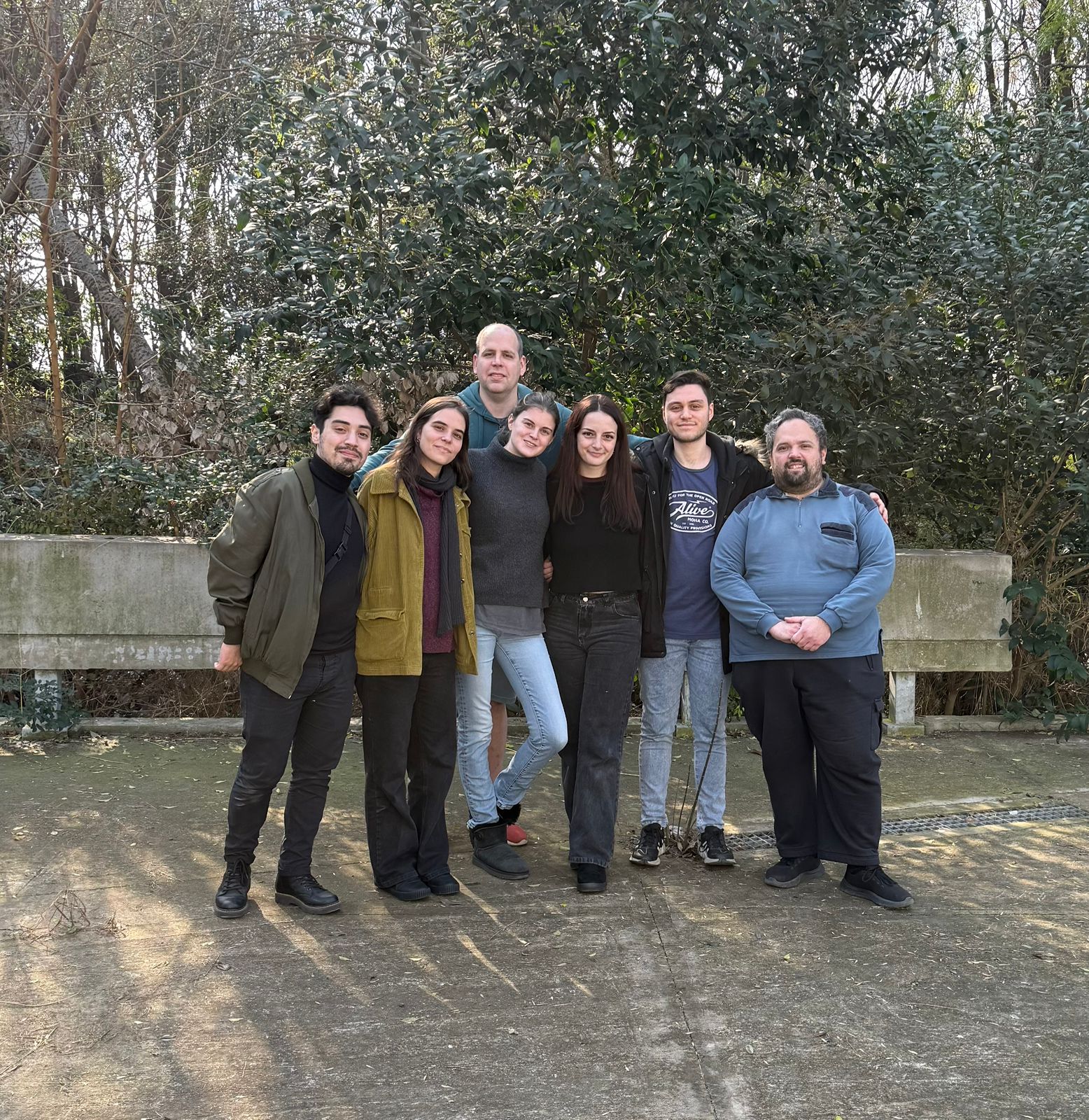
Integrantes del grupo

Rodrigo Gonzalez

Investigador Asistente CONICET (Biólogo)

Lic. Cecilia Cermesoni

Tesista doctoral (bióloga)

Lic. Carola Agranatti

tesista doctoral (Bióloga)

Lic Santiago Llanos

Tesista Doctoral (Físico)

Camila Pagano

Tesista Licenciatura (Biología)

Ignacio Del Valle

Pasante (estudiante biología)

Lola Calamante

Tesista Licenciatura (Biología)

Tiara

pasante (estudiante biología)

Miembros Anteriores

Dr. Federico Fuchs Wightman

Tesista Licenciatura

Lic. Franco Ryll

Tesista Licenciatura

Compartir en Redes Sociales