Area de estudio / Field of Study

Photo-damage lab

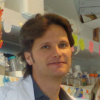
Dr. Manuel J. Muñoz
JEFE DE GRUPO / GROUP LEADER

Investigador adjunto CONICET
Investigador Visitante IFOM (Fondazione Istituto FIRC di Oncologia Molecolare), Milán, Italia.
Jefe de Trabajos Prácticos, Departamento de Fisiología, Biología Molecular y Celular, FCEN, UBA.
Contact: mmunoz@fbmc.fcen.uba.ar  – munoz.photo.damage@gmail.com

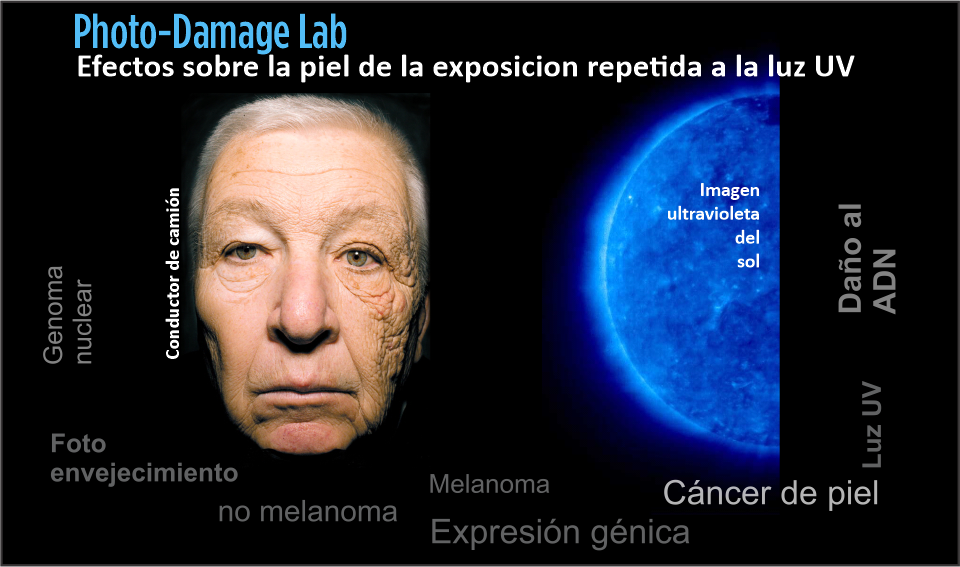
La exposición a la radiación ultravioleta (UV) proveniente del Sol representa el principal factor de riesgo para el desarrollo del cáncer de piel. Por su parte, el foto-envejecimiento hace referencia al deterioro acelerado en zonas de la piel expuestas al Sol, el cual se hace evidente con el paso de los años.

Nuestro laboratorio se dedica al estudio de las consecuencias del daño al ADN inducido por luz UV, un factor de indiscutida relevancia tanto en el desarrollo del cáncer de piel como en el foto-envejecimiento. En particular analizamos, a nivel molecular, cómo la exposición a la luz UV modula la expresión génica y la sobrevida celular en queratinocitos humanos, el tipo celular más abundante en la piel.

Al revelar mecanismos celulares clave en la respuesta ante el daño al ADN, nos proponemos desarrollar alternativas innovadoras para mejorar la salud de la piel.

English version

Exposure to ultraviolet (UV) radiation from the sun represents the primary risk factor for the development of skin cancer. Photoaging, on the other hand, refers to the accelerated deterioration of skin areas exposed to the sun, which becomes evident over the years.

Our laboratory is dedicated to studying the consequences of DNA damage induced by UV light, an undeniably relevant factor in both the development of skin cancer and photoaging. Specifically, we analyze, at a molecular level, how exposure to UV light modulates gene expression and cell survival in human keratinocytes, the most abundant cell type in the skin.

By revealing key cellular mechanisms in the response to DNA damage, we aim to develop innovative alternatives to improve skin health.

Linea de Investigación /  Research

Efecto del daño al ADN sobre la expresión de genes nucleares en células de la piel.

Nuestro grupo ha realizado aportes clave en el campo del daño al ADN nuclear, la expresión génica y la muerte celular (Muñoz et al., Cell 2009, Muñoz et al., Cell Reports 2017). Actualmente, utilizando queratinocitos humanos como modelo de estudio, proponemos que el sistema de reparación de ADN por escisión de nucleótidos NER (Nucleotide Excision Repair) controla, además de la reparación del ADN, la degradación de la ARN polimerasa II (RNAPII) (Choudhary et al., NAR 2026). Así, el conocimiento generado por nuestro grupo planeta un modelo de control de la sobrevida celular ante el UV modulado por el sistema NER y los niveles de RNAPII, los cuales determinarán la calidad y cantidad de expresión génica ante el daño al ADN.

Impact of DNA damage on nuclear gene expression in skin cells.

Our group has made significant contributions to the understanding of nuclear DNA damage, gene expression, and cell death (Muñoz et al., Cell 2009; Muñoz et al., Cell Reports 2017). Currently, using human keratinocytes as a model, we propose that the Nucleotide Excision Repair (NER) system not only repairs DNA but also induces the degradation of the key enzyme RNA Polymerase II (RNAPII) (Choudhary et al., under revision). We propose a model for the control of cell survival in response to UV that depends on NER activity and RNAPII degradation. Altered RNAPII levels will, in turn, determine the quality and quantity of gene expression following DNA damage and, hence, cell fate.

Efecto del daño al ADN sobre la estabilidad del genoma mitocondrial en células de la piel.

A diferencia de lo que ocurre con el ADN nuclear, las consecuencias del daño al ADN mitocondrial (ADNmt) son pobremente conocidas. El genoma mitocondrial codifica para factores esenciales de la respiración celular y mutaciones en el ADNmt son frecuentemente encontradas en tejidos transformados, pero no en tejidos sanos. Actualmente estamos desarrollando herramientas moleculares para modificar el genoma mitocondrial, de manera de comprender los efectos del daño al ADNmt por luz UV en cuanto a su expresión y duplicación.

Effect of DNA Damage on mitochondrial DNA stability in skin cells

In contrast to the well-established consequences of nuclear DNA damage, the effects of mitochondrial DNA (mtDNA) damage remain poorly understood. The mitochondrial genome encodes essential factors for cellular respiration, and mutations in mtDNA are frequently found in transformed (cancerous) tissues, but not in healthy tissues. We are currently developing molecular tools to modify the mitochondrial genome in order to elucidate the effects of UV light-induced mtDNA damage on its expression and replication.

Identificación de nuevos factores involucrados en la degradación de la ARN polimerasa II.

En relación con las consecuencias del daño al ADN nuclear, actualmente estamos llevando a cabo un screening no sesgado en levaduras (S. cerevisiae) con el fin de identificar nuevos factores involucrados en la degradación de la RNAPII. Destacamos que los factores identificados podrían representar potenciales targets terapéuticos asociados al daño al ADN y la regulación de la expresión génica.

Identification of novel factors involved in RNA polymerase II degradation.

In relation to UV-induced nuclear DNA damage, we are currently developing an unbiased screening in yeast (S. cerevisiae) to identify new factors involved in the degradation of RNAPII. The identification of these factors may provide insights into potential therapeutic targets for diseases associated with DNA damage and transcriptional dysregulation.


Publicaciones

Publicaciones (selección):

Ramveer Choudhary, Juan C. Muñoz, Inés Beckerman, María Luz Rebottaro, Giulia Bastianello, León A. Bouvier, Marco Foiani and Manuel J. Muñoz.

“RNA Polymerase II Degradation Triggered by DNA Repair Occurs In Trans and Independently of how the Lesion is Recognised”

Nucleic Acids Research, 2026, 5;54(1):gkaf1416.


Juan C. Muñoz, Inés Beckerman, Ramveer Choudhary, León A. Bouvier, Manuel J. Muñoz.

“DNA Damage-Induced RNAPII Degradation and Its Consequences in Gene Expression”

Genes 2022, 13(11), 1951


Federico Fuchs Wightman, Anabella Srebrow*, Manuel de la Mata*, Manuel J. Muñoz*, Ignacio E. Schor*, Ezequiel Petrillo*

“A DNA intercalating dye-based RT-qPCR alternative to diagnose SARS-CoV-2”

RNA biol, 2021 18(12):2218-2225

* autores correspondientes


Nieto Moreno N, Villafañez F, Giono LE, Cuenca C, Soria G, Muñoz MJ, Kornblihtt AR.

“GSK-3 Is an RNA Polymerase II phospho-CTD Kinase”

Nucleic Acids Research, 2020. 48(11):6068-6080.


Cambindo Botto, A.E., Muñoz, J.C. and Muñoz, M.J.

“Coupling between Nucleotide Excision Repair and Gene Expression”

RNA Biology, 2018. 17:1-4.


Muñoz, M.J., Nieto Moreno, N., Giono, L.E., Cambindo Botto, A., Dujardin, G., Bastianello, G., Lavore, E., Torres-Méndez, A., Menck, C.F.M., Blencowe, B.J., Irimia, M., Foiani, M., Kornblihtt, A.R.

“Major roles of cyclobutane pyrimidine dimers, nucleotide excision repair and ATR in the alternative splicing response to UV irradiation”

Cell Reports, 2017. 18:2868-79.

Trabajo seleccionado como tapa de la revista.


Kornblihtt AR, Schor IE, Alló M, Dujardin G, Petrillo E and Muñoz MJ.

“Alternative splicing: a pivotal step between eukaryotic transcription and translation”

Nature Reviews Molecular and Cell Biology. 2013, 14(3):153-65.


Muñoz, M. J., de la Mata, M. and Kornblihtt, A. R.

“The carboxy terminal domain of RNA polymerase II and alternative splicing”

Trends in Biochemical Sciences, 2010. 35(9):497-504.


Manuel J. Muñoz, M. Soledad Pérez Santangelo, Maria P. Paronetto, Manuel de la Mata, Federico Pelisch, Stéphanie Boireau, Kira Glover-Cutter, Claudia Ben-Dov, Matías Blaustein, Juan J. Lozano, Gregory Bird, David Bentley, Edouard Bertrand, and Alberto R. Kornblihtt.

“DNA Damage Regulates Alternative Splicing through Inhibition of RNA Polymerase II                Elongation”

Cell, 2009; 137(4): 708-20.


Comentado como Leading Edge en Cell 137, 600-602 (2009)

Comentado en Nature Reviews Molecular Cell Biology 10, 440 (2009)
Colaboradores / Collaborators

Marco Foiani, PhD, IFOM-ETS, University of Milan (Italy)


Sophie Polo, PhD, University of Paris Cite (France)


Fernando Larcher, PhD, Epithelial Biomedicine Division (CIEMAT), University Carlos III (Spain)

Luciano Marasco, PhD, University of Oxford (UK)

Michael Knop, PhD, University of Heidelberg (Germany)

Matias Juanes, MD & M. Sol Touzon, MD, Hospital de Pediatría “Prof. Dr. J.P. Garrahan” (Argentina)

Servicios Técnicos / Technical Services

Servicio Técnico de Alto Nivel (STAN) CONICET:

estudios de fotoproteccion / Photo protection assays.

Code ST 2909.

Subsidios

Subsidios: 

Expresión Génica y procesamiento del ARN en patologías humanas.

Redes Federales de Alto Impacto. Ministerio de Ciencia, Tecnología e Innovación, 2023 (CONVE-2023-100766162-APN-MCT).

Agenda
[ecwd id="9894"]

Integrantes del grupo / Lab Members

Dr. León A. Bouvier

Investigador CONICET

Dra. Ines Beckerman

Becaria Doctoral CONICET

Lic. M. Luz Rebottaro

Becaria Doctoral CONICET

Miembros Anteriores

Dr. Juan Muñoz

Becario doctoral CONICET

Compartir en Redes Sociales