
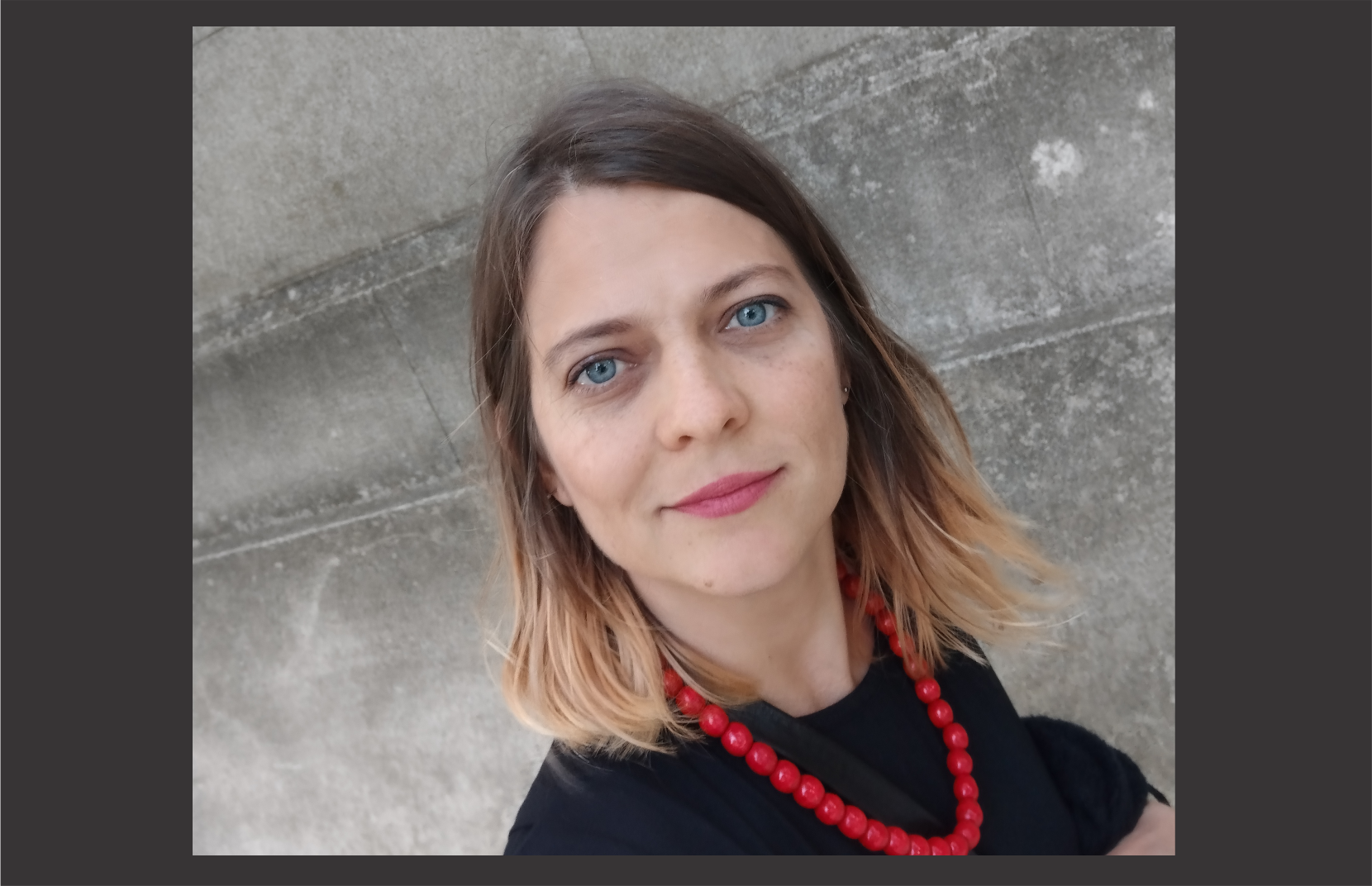
Una de las maneras más frecuentes por las que los animales, sobre todo humanos, adquirimos información nueva es por observación. En el laboratorio trabajamos con un modelo de aprendizaje observacional de miedo en ratones, en el que un individuo aprende de lo que le pasa a otro. Nuestro objetivo es estudiar los mecanismos cerebrales subyacentes a este tipo de aprendizajes sociales, explorando el rol de distintas regiones del cerebro, como la corteza anterior cingulada y el núcleo paraventricular del hipotálamo. Este tipo de estudios es clave para entender mejor las bases del estrés post traumático, y, además, ofrece un marco experimental valioso para modelar procesos relacionados con la empatía en animales, posibilitando así dar luz a los mecanismos implicados en los desórdenes del sistema nervioso central con déficits en empatía.
Neuronal circuits underlying observational memories
One of the most common ways in which animals—especially humans—acquire new information is through observation. In our laboratory, we work with a mouse model of observational fear learning, in which an individual learns from witnessing what happens to another. Our goal is to study the brain mechanisms underlying this form of social learning, exploring the roles of different brain regions such as the anterior cingulate cortex and the paraventricular nucleus of the hypothalamus. This type of research is key to better understanding the foundations of post-traumatic stress and also provides a valuable experimental framework for modeling empathy-related processes in animals, thereby shedding light on the mechanisms involved in central nervous system disorders characterized by deficits in empathy.
La capacidad de recordar a los congéneres es fundamental para la estabilidad de los grupos sociales. Las interacciones sociales dependen de reconocer a los demás y descifrar sus expresiones y emociones. Alteraciones en estas habilidades constituyen un sello distintivo de varios trastornos psiquiátricos, del neurodesarrollo y neurodegenerativos. En roedores, las tareas de “reconocimiento social” proporcionan un marco experimental sólido para estudiar los mecanismos biológicos que sustentan esta función cognitiva evolutivamente relevante. El objetivo general de nuestra línea de investigación es comprender los circuitos neuronales involucrados en el reconocimiento social.
Neuronal circuits underlying social recognition
The ability to remember conspecifics is fundamental for the stability of social groups. Social interactions rely on recognizing others and interpreting their expressions and emotions. Alterations in these abilities are a hallmark of several psychiatric, neurodevelopmental, and neurodegenerative disorders. In rodents, social recognition tasks provide a solid experimental framework for studying the biological mechanisms underlying this evolutionarily relevant cognitive function. The overarching goal of our research line is to understand the neural circuits involved in social recognition.
2022. Hao Li*, Praneeth Namburi*, Jacob M. Olson*, Matilde Borio, Mackenzie E. Lemieux, Anna Beyeler, Gwendolyn G. Calhoon, Natsuko Hitora-Imamura, Austin A. Coley, Avraham Libster, Aneesh Bal, Xin Jin, Huan Wang, Caroline Jia, Sourav R. Choudhury, Xi Shi, Ada C. Felix-Ortiz, Verónica de la Fuente, Vanessa P. Barth, Hunter O. King, Ehsan M. Izadmehr, Jasmin S. Revanna, Kanha Batra, Kyle B. Fischer, Laurel R. Keyes, Nancy Padilla-Coreano, Cody A. Siciliano, Kenneth M. McCullough0, Romy Wichmann, Kerry J. Ressler, Ila R. Fiete, Feng Zhang, Yulong Li, Kay M. Tye. “Neurotensin orchestrates valence assignment in the amygdala”.Nature. Jul 20. doi: 10.1038/s41586-022-04964-y.
2020. Candela Medina; Verónica de la Fuente*; Susanne tom Dieck; Belquis Nassim-Assir; Tamas Dalmay; Ina Bartnik; Paula Lunardi; Lucas de Oliveira Alvares; Erin M Schuman; Johannes J Letzkus; Arturo Romano*. “Cofilin 1 involvement in fear memory processing”. Neurobiol Learn Mem. 2020 Sep;173:107275. doi: 10.1016/j.nlm.2020.107275. Epub 2020 Jul 11. *co-corresponding authors.
2019. de la Fuente V1*, Medina C1, Falasco G, Urrutia L, Kravitz AV, Urbano F, Vazquez S, Pedreira ME, Romano A. The lateral neocortex is critical for contextual fear memory reconsolidation. Sci Rep. 2019 Aug 21;9(1):12157. doi: 10.1038/s41598-019-48340-9. 1: both authors contributed equally. *corresponding author.
2019. Zalcman G, Federman N, Fiszbein A, de la Fuente V, Ameneiro L, Schor I, Romano A. Sustained CaMKII Delta Gene Expression Is Specifically Required for Long-Lasting Memories in Mice. Mol Neurobiol. 2019 Feb;56(2):1437-1450. doi: 10.1007/s12035-018-1144-3.
2018. Lunardi P, Sachser RM, Sierra RO, Pedraza LK, Medina C, de la Fuente V, Romano A, Quillfeldt JA, de Oliveira Alvares L. Effects of Hippocampal LIMK Inhibition on Memory Acquisition, Consolidation, Retrieval, Reconsolidation, and Extinction. Mol Neurobiol. 2018 Feb;55(2):958-967. doi: 10.1007/s12035-016-0361-x.
2015. Zalcman GP, Federman N, de la Fuente V, Romano A. Nuclear factor kappa B-dependent zif268 expression in hippocampus is required for recognition memory in mice. Neurobiol Learn Mem. 2015 Mar;119:10-7. doi: 10.1016/j.nlm.2014.12.013.
2015. de la Fuente V, Federman N, Zalcman G, Salles A, Freudenthal, R and Romano A. NF-κB transcription factor role in consolidation and reconsolidation of persistent memories. Front Mol Neurosci. 2015 Sep 9;8:50. doi: 10.3389/fnmol.2015.00050. eCollection 2015. Review.
2014. de la Fuente V, Federman N, Fustiñana MS, Zalcman GP, and Romano A. Calcineurin phosphatase as a regulator of fear memory formation: control on NF-κB signaling in consolidation and reconsolidation. Hippocampus. 2014 Dec;24(12):1549-61. doi: 10.1002/hipo.22334.
2014. Federman N, Zalcman G, de la Fuente V, Fustiñana MS, Romano A. Epigenetic mechanisms and memory strength: a comparative study. J Physiol Paris. 2014 Sep-Dec;108(4-6):278-85. doi: 10.1016/j.jphysparis.2014.06.003. Epub 2014 Jun 28. Review.
2014. Fustiñana MS, de la Fuente V, Federman N, Freudenthal R and Romano A. Protein degradation by ubiquitin-proteasome system in formation and labilization of contextual conditioning memory. Learn Mem. 2014 Aug 18;21(9):478-87. doi: 10.1101/lm.035998.114.
2014. Ogara MF, Belluscio LM, de la Fuente V, Berardino BG, Sonzogni SV, Byk L, Marazita M, Cánepa ET. CDK5-mediated phosphorylation of p19ink4d avoids DNA damage-induced neurodegeneration in mouse hippocampus and prevents loss of cognitive functions. Biochim Biophys Acta. 2014 Jul;1843(7):1309-24. doi: 10.1016/j.bbamcr.2014.03.026.
2013. Federman N, de la Fuente V, Zalcman G, Corbi N, Onori A, Passananti C, Romano A. Nuclear factor κB-dependent histone acetylation is specifically involved in persistent forms of memory. J Neurosci. 2013 Apr 24;33(17):7603-14. doi: 10.1523/JNEUROSCI.4181-12.2013.
2011. de la Fuente V, Freudenthal R, Romano A. Reconsolidation or extinction: transcription factor switch in the determination of memory course after retrieval. J Neurosci. 2011 Apr 13;31(15):5562-73. doi: 10.1523/JNEUROSCI.6066-10.2011.
2007. Boccia M, Freudenthal R, Blake M, de la Fuente V, Acosta G, Baratti C, Romano A. Activation of hippocampal nuclear factor-kappa B by retrieval is required for memory reconsolidation. J Neurosci. 2007 Dec 5;27(49):13436-45. doi: 10.1523/JNEUROSCI.4430-07.2007
-ANPCyT-FOCYT PICT2019 “Estudio de los circuitos implicados en el aprendizaje y procesamiento de información nueva adquirida por observación”. Grupo en formación. Investigadora Responsable. 1.063.125,00 pesos argentinos. Duración 3 años.
-International Brain research Organization Collaborative Grant, 6000 EUR. Investigadora Responsable. Colaboración con Azahara Oliva, Cornell University.
Integrantes del grupo / Team members

Emiliano Lower
Estudiante de doctorado / PhD student
Emiliano Lower
Estudiante de doctorado / PhD student

Lucila Torres
Estudiante de doctorado / PhD student
Lucila Torres
Estudiante de doctorado / PhD student

Lucio Maldonado
Estudiante de doctorado / PhD student
Lucio Maldonado
Estudiante de doctorado / PhD student

Martina Serra
Estudiante de licenciatura
Martina Serra
Estudiante de licenciatura

Carolina Varela
Estudiante de licenciatura
Carolina Varela
Estudiante de licenciatura